Death is our one true promise and if it is our time to leave earth, nothing can stop this from happening. Pre-mature death is quite a different matter. And we have no way of determining the difference between the two.
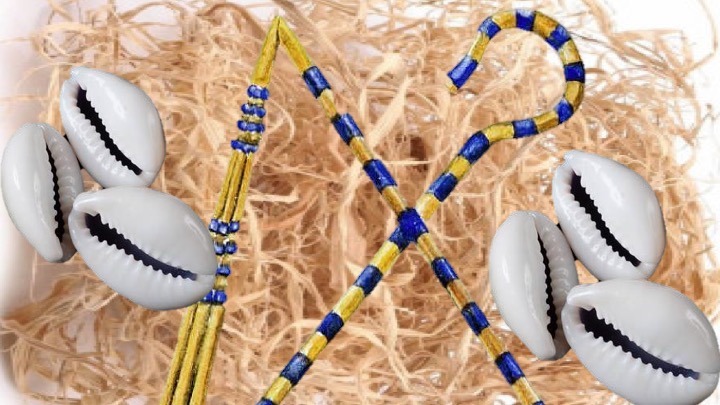
The 2020 Gregorian Decade, has greeted us with terrifying news of a disease pandemic, which has already taken many souls back to their ancestors. Condolences to their friends and family members. The Ifa spiritual practice accounts for this devastation by attributing the process to Orish Obaluaye. His name is a combination of King (Oba) and Earth (aye). His symbolisms are the crook, symbolising his authority and the small broom, symbolising his ability to clear away disease. He dresses in raffia to symbolise poverty, yet it is adorned with cowrie shells, a symbol of wealth. In the ifa system of divination he is associated with Oturopon Meji, the 12th binary Odu energy signature, where the spirit of disease is invoked. Orisha Egungun (the spirit of the ancestors) also features heavily in this reading. So what can we learn from these events? And how should we proceed going forwards?
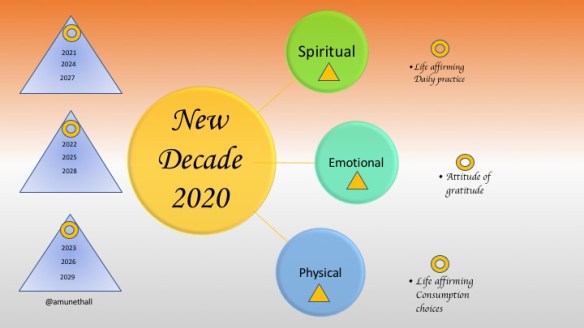
We are here at last. Ten days into the new decade. How does it feel? Perhaps your resolutions are for the decade rather than just the year. However anything we want to do, demands a process of incremental steps.
Here are some questions to customise your results: What have you been creating? Who will help you? When will it happen? Who will benefit from your gifts to the world?
The Full Moon phase is a good time to consolidate projects started during the New Moon… GAIN ACCESS TO THE FULL POST BY CLICKING ON THE LINKBELOW:
Happy Holidays to one and all. Now is a good time to tap into the creative energies of the dark moon and the rebirth resonances of the solstice sun. This is what is meant by the statment “as above so below.”
More power to you and your work today and for the forthcoming new decade: 2020 here we come. For more lessons in soul survival become a Patron and gain access to a growing library of personal development and spiritual growth. Thank you for your time and for your support.
When we decide to bring harmony into our lives, it is imperative that we acknowledge the importance of learning from nature. The idea of “As above, so below” is what we should keep in mind. Each nation has their own story of the sky. However the physical movements in Astronomy is what guides these fables and predictions. Today the planet has tilted away from the sun in the northern hemisphere, with a corresponding tilt towards the sun in the southern hemisphere. As the sun is now in favour of the south, they are having summer, as we are tilted away from the sun in the northern hemisphere, we are experiencing winter. For more information click on this link https://www.patreon.com/AmunetHall
This video is about the December Solstice. Read the full article and download your Sun of the South December Solstice Greetings card on https://www.patreon.com/AmunetHall
We are three weeks into the final month of 2019, a new decade beckons and we are here on the eve of the 2020’s. With each decade comes new ideas. Which significant changes will you be incorporating into your life? Which changes will you be giving a wide birth? Who has surprised you in a good way, or may have challenged your view of them? Have you surprised yourself in any way? Perhaps this is a rhetorical question: you are one of seven billion and counting and change is the only constant, for ourselves, our planet and the universe. It is no secret that our existence on earth, has been thwarted by problems which are self initiated, or caused by environmental, political, social or economic concerns: indeed, some of these issues are in our control, others may not be. And when we attempt to harmonise our gifts and talents with the needs of society, success will be waiting to degrees on a scale of our own making.
How have you been using your time over the last decade? In other words, you have had access to what we call 10 years or 120 months or 3,650 days. These bench marks have been shared with you as a reminder, to make plans for the next new decade using your daily allocation of 1,440 daily minutes. Get excited its going to be great.
What are your dreams, your goals, your talents? Have you found out why you are here? If not, now might be a good time to investigate. Find your teachers and journey guides. Ask for their help. Outline a plan of how you will help yourself. Explore what the pitfalls might be in all that you put into place.
Who are your kindred spirits, who will journey with you? Have you found them yet? So much to do to fit into our time here on earth. And When you create your own questions to customise your results, you will know what you have to do. Journaling is a good way to review how you have spent your time and how best to use your gifts and talents going forward. So the question is, what are you getting ready to do? What have you decided to put into your 2020 timeline?
“…Age of darkness. Age of light. Age of industry. Age of pollution and blight…”
The above preview is taken from Amunet’s Fables book 7 ‘Crystalline Towards The Grid’ in the fable ‘Is This Earth?’ and is referring to the irreversible damage being caused by industrialisation and the slow death of our planet. The Earth Day Celebration is featured in the story and it is Earth Day today…
Baobab Avenue Madagascar
What are Earth Day protestors so concerned about? Studies have found that the impact of atmospheric pollutants are directly impacting earths fauna and flora in ways never before seen in the history of our planet. Trees and plants are our main source of oxygen, so when the last tree dies, the last human will follow. This really is a matter of life and death. Researcher Aida Cuni Sanchez has done extensive research on the negative impact of global warming on our planet and has written the following article:
Nine out of 13 of Africa’s oldest and largest baobab trees have died in the past decade, it has been reported. These trees, aged between 1,100 and 2,500 years old, appear to be victims of climate change. Scientists speculate that warming temperatures have either killed the trees directly or have made them weaker and more susceptible to drought, diseases, fire or wind.
Old baobabs are not the only trees which are affected by climatic changes. Ponderosa pine and pinyon forests in the American West are dying at an increasing rate as the summers get warmer in the region. In Hawaii, Ohi’a trees are also dying at faster rates than previously recorded.
Since baobabs produce only faint growth rings, researchers used radiocarbon dating to analyse samples taken from different parts of each tree’s trunk and determined that the oldest (which is now dead) was more that 2,500 years old.
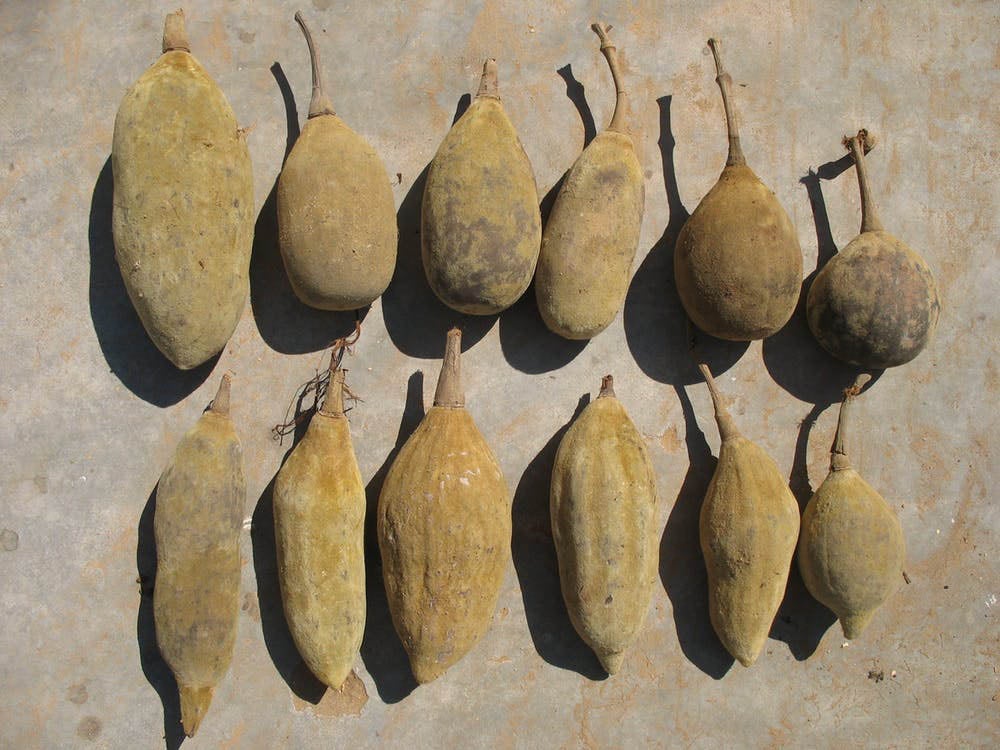
They also have more than 300 uses. The leaves, rich in iron, can be boiled and eaten like spinach. The seeds can be roasted to make a coffee substitute or pressed to make oil for cooking or cosmetics. The fruit pulp has six times more vitamin C than oranges, making it an important nutritional complement in Africa and in the European, US and Canadian markets.
The fruit of the baobab tree is rich in vitamin C, making it an important nutritional supplement (Aida Cuní Sanchez)
Locally, fruit pulp is made into juice, jam, or fermented to make beer. The young seedlings have a taproot which can be eaten like a carrot. The flowers are also edible. The roots can be used to make red dye, and the bark to make ropes and baskets.
Baobabs also have medicinal properties, and their hollow trunks can be used to store water. Baobab crowns also provide shade, making them an idea place for a market in many rural villages. And of course, the trade in baobab products provides an income for local communities.
Baobab trees also play a big part in the cultural life of their communities, being at the centre of many African oral stories. They even appear in The Little Prince, the most famous book byAntoine de Saint-Exupéry.
Cultivating baobab
Baobab trees are not only useful to humans, they are key ecosystem elements in the dry African savannas. Importantly, baobab trees keep soil conditions humid, favour nutrient recycling and avoid soil erosion. They also act as an important source of food, water and shelter for a wide range of animals, including birds, lizards, monkeys and even elephants – which can eat their bark to provide some moisture when there is no water nearby. The flowers are pollinated by bats, which travel long distances to feed on their nectar. Numerous insects also live on the baobab tree.
Ancient as they are, baobab trees can be cultivated, as some communities in West Africa have done for generations. Some farmers are discouraged by the fact that they can take 15-20 years to fruit – but recent research has shown by grafting the branches of fruiting trees to seedlings they can fruit in five years.
Many “indigenous” trees show great variation in fruit morphological and nutritional properties – and it takes years of research and selection to find the best varieties for cultivation. This process, called domestication, does not refer to genetic engineering, but the selection and cultivation of the best trees of those available in nature. It seems straightforward, but it takes time to find the best trees – meanwhile many of them are dying.
The death of these oldest and largest baobab trees is very sad, but hopefully the news will motivate us to protect the world’s remaining large baobabs and start a process of close monitoring of their health. And, hopefully, if scientists are able to perfect the process of identifying the best trees to cultivate, one day they will become as common in our supermarkets as apples or oranges.
Aida Cuni Sanchez is a postdoctoral research associate at the University of York. This article first appeared on TheConversation.com
Sponsored by Amunet’s Fable Crystalline Towards The Grid (book 7 in the series)
‘Crystalline Towards The Grid’ by Amunet Hall, a collection of short stories including:
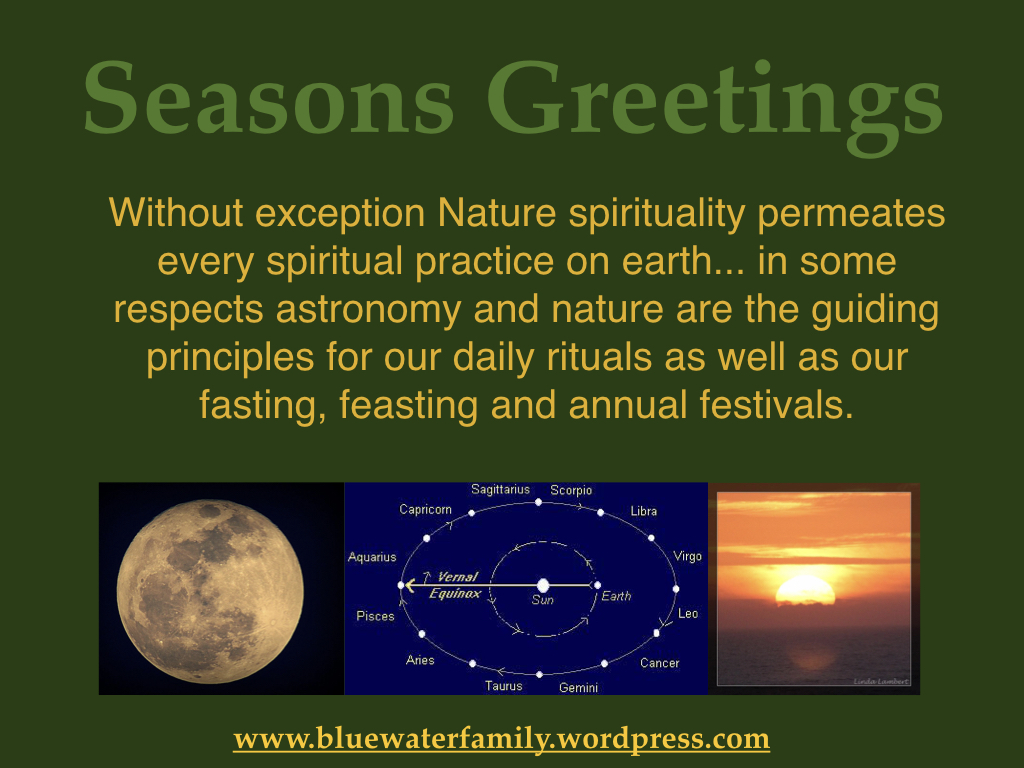
The December solstice in the northern hemisphere alludes to Spiritual transformation and creativity both of which are internal processes, both of which take place in the darkness, in the depths of our being, called by many names and variously described at different levels as the soul, the spirit, the direct connection to the source of all things, our connectedness to nature, and the Collective unconscious as coined by Carl Jung.
The name itself is derived from the Latin ‘Sol’ meaning the sun and ‘sistere’ meaning to stand. The combined variations are ‘solstitium’ or solstice. The sun standing still is alluding to the fact that during the solstice transits, the sun will either reach its highest point in the sky and we experience the longest day or reach the lowest point in the sky and we experience the longest night. On both occasions during the days following the actual event of the tilt towards or away from the sun, the sun will appear to be standing still before it changes direction and takes us towards spring or autumn.
Spiritually the sun is said to die and is reborn again around 25th December. Numerous winter festivals are based on the movements of the celestial bodies in the heavens which are used to provide guidance on how humanity should live. This was the case in ancient Egypt which although contested, predates Christianity by thousands of years. The iconography, deities, and symbolism from around the world and in the major world religions, can be found in ancient Egypt: The birthplace of marking time and the first written calendar.
DR CHARLES S. FINCH
III
Eminent scholar, author and African Indigenous Priest, Dr Charles S. Finch III reminds us to acknowledge the solstice transit and immerse ourselves in the energy of the full moon, which falls on the day after today’s auspicious event. For more knowledge of self and the universe visit with Dr Finch here: http://www.charlessfinch.com/
THE SUN AND THE MOON
Universally we have come to view this time of year as a time to celebrate life with family and friends. December is also a time to take stock and make plans for the coming year. Be reminded that the Sun and the Moon help us to mark time. For those who need help with time management and goal setting, preview a free taster online training here:https://wayt1.teachable.com/
A FUN QUIZ
Now for a little bit of Fun with the chance to win a copy of
Amunet’s Fables: A Time For Everything. Most of the information can be found
here on the Blue Water Family blog.
Online Time Management Training Sponsored by ‘A Time For Everything’
Dear Reader,
December 2018 is here! Need I remind you what time it is? Family Time Winter Festivals and Time to Take Stock; Shorter Days, Longer Nights and at this time of year, be reminded that Your Creative Juices are Flowing. Keep warm and get excited. The next thing to plan for is the new year…
Need any help with structuring your time for 2019 and beyond?
If the answer is NO well done, I hope you share your method with others and share this content with them too.
If the answer is YES and you need some guidance, I am happy to share the process I have created to help you get things done, and because I regularly review my progress, I am able to share the does and don’ts.
What is on offer? An online Training Course Just For You. The course is self-paced with, inspirational, motivational and transformational content, including a chat room where you can ask questions and read what others are saying.
‘Time To Make Time Part 1’ is now available at a great introductory seasonal offer of just $44:40 inc VAT YOU CAN GAIN ACCESS HERE: Time to Make Time Part 1
PLUS 3 BONUSES
BONUS 1 When you enroll in the school there is a FREE access preview.
BONUS 2 When you get to checkout apply discount Coupon Code ZT5P2 to your purchase for Time To Make Time Part 1 and start creating your future with a reliable Time Management Technique.
BONUS 3 The first 35 students to sign up for Time To Make Time Part 1 will gain FREE access to Time To Make Time Part 2 when you agree to review your learning experience.
Be reminded that when you manage your time you are sending a message to the world that you value your life.
Go ahead and invest in yourself you are more than worth it. Click on the link here: Time to Make Time Part 1
Vision Well for yourself and others and feel free to share.
It’s always good to feel good about things going well in your life. There is a sense of calm and a willingness to let go.
How can this be achieved? Well one way is to manage your time. Why not accept the invitation to enrol onto this FREE taster. And do share how you get on.
Help us to unite the global family -
Follow us on Twitter @BlueWaterFamily -
Share the knowledge -
Follow us on WordPress -
Comment on Posts -
Attend our events -
Support our main sponsor and buy the Amunet's Fables Series of books.
Thank you for visiting our Blog - Come back again SOON









 Blue Water Family
Recent Comments